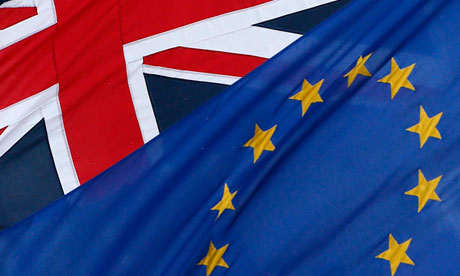
A “Daily Mail” poll, last week, showed that, in a sudden change, 51% of UK voters now want to leave the EU, whereas 49% want to stay in.
This big change in opinion seems to be related to the refugee crisis, because the poll also shows voters strongly favour David Cameron’s unwillingness to accommodate large numbers of refugees as against Angela Merkel’s support for all EU countries accommodating a substantial quota.
This dramatic change in opinion shows how a referendum result on a particular day can turn on unexpected events, and how a permanent decision can be influenced by what may prove to be temporary phenomena
The UK already had a referendum on whether to stay in the EU in 1975. Now it is to have another in 2017. But will this 2017 referendum settle the question?
Eurosceptics, like Nigel Farage, have welcomed the decision of David Cameron to change the wording of the question UK voters will be asked to decide on, from a “Yes” or “No” to UK membership, to one which asks whether UK voters want to “remain” in, or “leave”, the Union.
This change was recommended to David Cameron by the Electoral Commission who felt the earlier formulation favoured those who wanted the UK to stay in the EU.
“Leave” implies action, “remain “could be construed as endorsing passivity. “Yes” would have implied positivity, “No” negativity. Generally people prefer to be positive. So perhaps Nigel Farage is right to be happy.
The bigger risk here is not in the wording of the question. It is in the political reality that, in a referendum, temporary considerations, like anger at some current government policy on an unrelated matter, may induce people to make a permanent decision that they would not make in normal circumstances.
That is why I prefer parliamentary democracy to referendum democracy.
In a referendum, the issue has to be reduced to a single question decided on a single day.
In the parliamentary system the decision is usually taken over many months, in a process which allows greater flexibility, and opportunities to change direction in light of what is learned.
But a referendum is what we are going to have, so it behoves everyone in all the 28 EU countries to do what they can to ensure, if they want the UK to stay in the EU, that the negotiation is concluded in a way that presents the EU in the best possible light to the UK electorate.
The UK’s negotiating approach, and the frame of mind in which the UK people approach the negotiations, are important here too. If the UK gets a good deal, that is endorsed in a referendum, will UK citizens then fully commit to the EU, or will they retain an attitude of conditional and skeptical membership, waiting for the next opportunity to find fault?
In 2003, I was chairman of the committee of the Convention on the Future of Europe which dealt with Justice and Home Affairs. Our task was to redraft the provisions of the EU Treaties dealing with cross border crimes. The UK had long been suspicious of continental courts having jurisdiction over UK citizens and wanted to limit EU activity in this field.
At each stage in the negotiation, the other parties to the negotiation went as far as they thought they could to accommodate UK concerns, only to find that once that was settled, the UK came back looking for more concessions on the same points.
The Convention’s “final” draft of the proposed EU Constitution, was not final. The UK looked for, and got, more concessions in the draft approved by the Heads of Government.
Then, when the Constitution failed in referenda in France and the Netherlands, and was replaced by a slightly slimmed down “Treaty” in Lisbon, the UK looked for, and got, even more concessions on their concerns, including a complete opt out, with a right to opt in at will.
Will the other states go all the way to their bottom lines, in the negotiation of the “improved” terms of UK membership if they think the UK will adopt a similar tactic and keep coming back for more? They will ask themselves how an EU of 28 members would work, if every country that UK approach.
Suppose the final deal is one that satisfies UK voters by a narrow margin, will future UK governments then be likely to go on looking for further concessions afterwards, on the same issues, every time there have to be any further revisions of the EU Treaties?
If the answer to these questions is yes, and there are many in the UK who will never be satisfied with what the EU offers, then the other 27 members may hold back from their maximum concession.
David Cameron may then find he has raised expectations in the UK unduly, and may fail to convince UK voters to remain in the EU.
Or he may find that his electorate wants to “experiment” with leaving the EU, just as many US voters want to experiment with Donald Trump, or some UK voters seem to want to experiment with Jeremy Corbyn.
There also is the related risk that UK voters may see the referendum as an opportunity to “make a statement” about their sense of who they are, rather than make a final, fully considered, decision about the future of Europe.
So we must prepare for the possibility of an EU without the UK.


